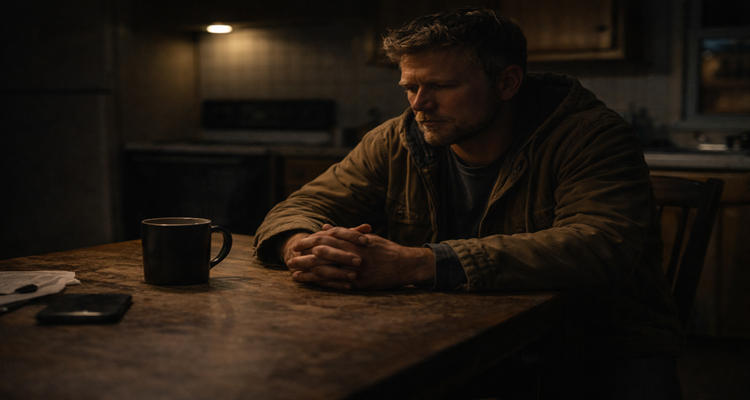
The Quiet Discipline of Not Giving Up on Yourself
Giving up doesn’t usually happen all at once.
It happens slowly, through exhaustion, disappointment, and the accumulation of small defeats. It happens when motivation fades, when progress stalls, and when life keeps asking for more than you feel you have left to give.
Not giving up on yourself in those moments isn’t dramatic. It doesn’t feel heroic. It feels quiet, stubborn, and often lonely.
But that quiet discipline the decision to keep choosing yourself even when you’re tired of carrying your own weight is one of the strongest forms of resilience there is.
Discipline isn’t loud motivation
Motivation is loud. It comes in waves. It gets people started.
Discipline is quieter. It keeps people going when motivation disappears.
Not giving up on yourself rarely looks like inspiration. It looks like:
- getting up when you don’t feel ready
- doing the minimum when the maximum isn’t possible
- continuing even when you’re unsure it will pay off
That kind of discipline doesn’t rely on feeling good. It relies on commitment.
The moments nobody sees
Most acts of self-preservation happen privately.
No one sees:
- the internal argument where you decide not to quit
- the moment you choose restraint over escape
- the decision to try again after another setback
These moments don’t earn applause. They don’t produce visible results right away. But they quietly shape who you become.
Not giving up on yourself is often a series of unseen choices stacked on top of each other.
When belief feels thin
There are seasons when belief in yourself feels worn down to almost nothing.
In those moments, discipline takes over where belief can’t.
You don’t move forward because you’re confident.
You move forward because stopping would cost you more.
That’s not weakness. That’s survival-level wisdom.
The difference between rest and quitting
One of the hardest lessons is learning the difference between resting and giving up.
Rest says:
“I’m pausing so I can continue.”
Quitting says:
“I’m done believing this is worth it.”
People who don’t give up on themselves learn to rest without surrendering the long view. They slow down without abandoning the road.
That distinction matters.
Discipline built through routine
When everything feels unstable, routine becomes a lifeline.
Small, repeatable actions restore a sense of control:
- waking up at the same time
- making coffee before the world demands anything
- sticking to simple habits even when energy is low
These routines don’t fix everything, but they keep you anchored.
Sometimes it’s the dependable basics like coffee, that help you reset each day.
Everyday coffee gear & home essentials: Grab em Here.
Nothing fancy. Just steady.
Choosing yourself quietly
Not giving up on yourself doesn’t always mean chasing big dreams.
Sometimes it means:
- refusing to self-destruct
- choosing stability over chaos
- continuing to show up for your own life
That choice, repeated over time, builds a kind of self-respect that doesn’t depend on outside validation.
You learn you can trust yourself not to disappear when things get hard.
The long road mindset
People who keep going quietly understand something others miss:
Life isn’t a sprint. It’s not even a marathon. It’s a long road with uneven stretches, detours, and seasons where progress feels invisible.
Not giving up on yourself means accepting that some chapters are about endurance, not achievement.
And that’s okay.
When starting over isn’t failure
Sometimes not giving up looks like starting again older, wiser, and more tired than before.
That doesn’t mean you failed.
It means you stayed.
You stayed in the fight long enough to try again. That alone puts you ahead of most.
The quiet discipline of not giving up on yourself isn’t glamorous. It doesn’t trend. It doesn’t draw attention.
But it changes everything.
Every time you choose to keep going without certainty, without praise, without energy you reinforce something unbreakable inside you.
And one day, you’ll look back and realize:
The strength that saved you was the strength no one saw but you lived it every day.